Tickets are on sale for our next event on Thursday, September 10! https://events.humanitix.com/nerd-nite-san-diego-60
Gabriel-Philip Santos
“That One Time Life Almost Disappeared: The Permian Mass Extinction”
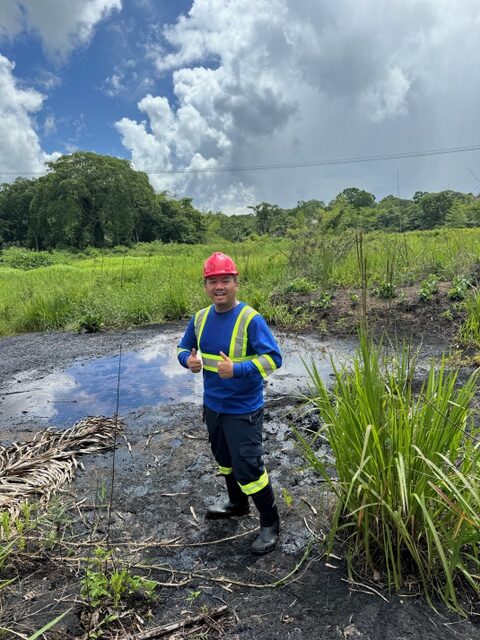
Gabriel-Philip Santos is a paleontologist, educator, and storyteller. He is cohost of PBS Eons and the Director of Visitor Engagement and Education at the Alf Museum of Paleontology. He has degrees from UC Irvine and CSU Fullerton. His previous research interests focused on evolution of marine mammals, particularly in the extinct hippo-like desmostylians. He now focuses his work on science education and engaging audiences through projects like the Cosplay for Science Alliance developing educational content for comic cons and other pop culture events. He was named a 2021 Grosvenor Teacher Fellow with National Geographic and Lindblad Expeditions for his work in science education and continues to develop his skills as a science storyteller through projects around the world.
Aalok Varma, PhD
“An unexpectedly useful transformation – the Burrows-Wheeler Transform”
Data often needs to be processed in some way to make it more efficient to store and access, or to extract relevant information from it. One particular method of processing data that’s in the form of text is called the Burrows-Wheeler Transform (BWT).
This transform shuffles text by rotating the order of the letters, sorting the rotations alphabetically, and then taking the last character of each sorted rotation. At first glance, the transformation seems ridiculous and unlikely to be useful. However, the shuffle is clever, as it produces a unique result for each input and has the property of clustering repeated characters together. What’s more, the BWT is reversible, so you can get back the original text from its transform. In my talk, I’ll walk through the BWT and share how it is used in different scientific fields – from computer science (data compression) to genomics (sequence alignment).
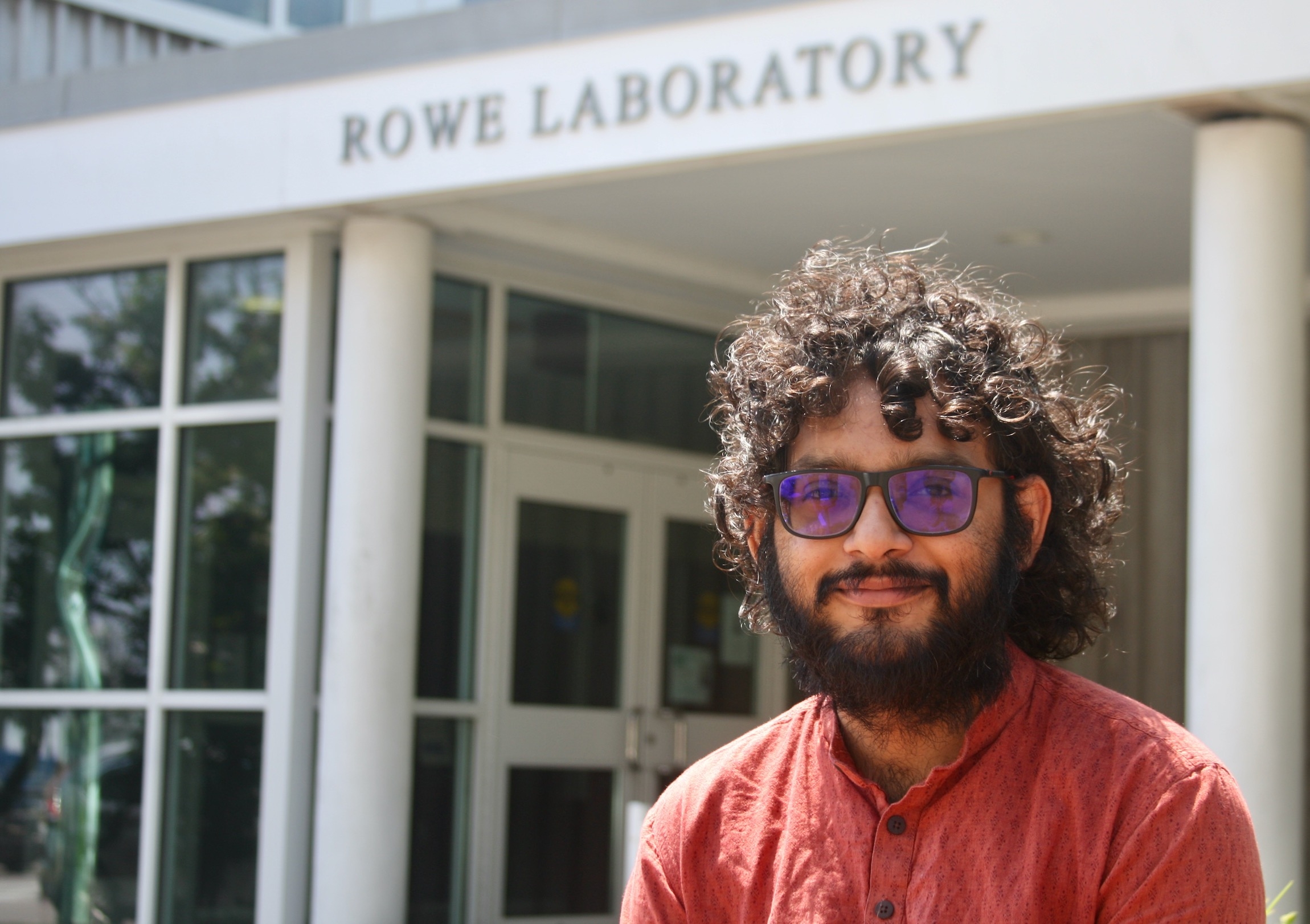
Aalok is a biologist and avid science communicator. Formally trained in neuroscience, he obtained a PhD from the National Centre for Biological Sciences (NCBS) in Bangalore, India. He is currently a postdoctoral fellow in Dr. Loren Looger’s lab at UC San Diego, where he works on understanding how ancient viruses shaped evolution, using cephalopods (squids, octopuses, and cuttlefish) as models. Sometimes he’s interesting (reading books, blogging and writing fiction, tidepooling, playing tennis, swimming, giving science talks), and sometimes he’s into resting (watching TV in bed). His blood is almost always caffeinated, yet sleep is his superpower. Learn more about Aalok at varmaalok22.github.io.
Laura Tubelle de González
“Why Mars Needs Anthropologists”
Human space exploration and anthropology may not seem to have anything in common. However, when the focus on space travel and settlement is stuck on the question “how can we science it?” it’s important to also ask “how the heck is it all going to work once we get there?” Our carbon flesh units are much less equipped for space settlement than the STEM folks give us credit for. This talk will address some human aspects of space exploration that we don’t talk about, but probably should.
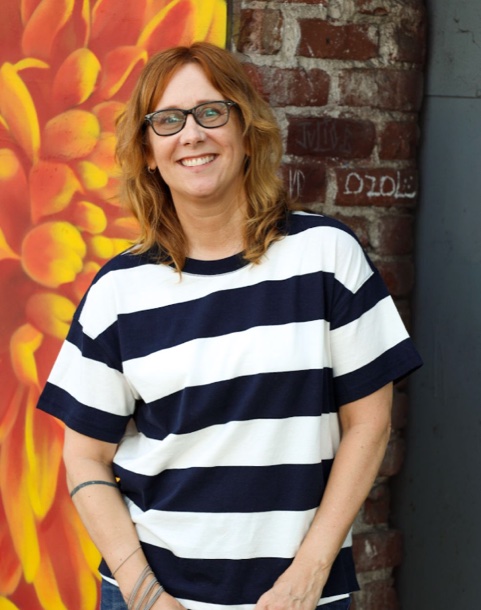
Laura Tubelle de González (she/her) couldn’t believe it when she learned in college that you could be nosy for a living as a cultural anthropologist. She combines her love for ethnographic research and teaching as a professor of anthropology at San Diego Miramar College. She is the author/co-author of two anthropology textbooks and a 2021 ACLS/Mellon Fellow for research on the anthropology of human space exploration. If Laura could live in a sci-fi universe, it would be as a crew member on the original 1966 Star Trek, mostly just to walk through the doors as they go whoosh. She would prefer not to be wearing a red shirt, however.