“The Submarine Hunter’s Ear: Why Ancient People Built Rooms That Sing Back”
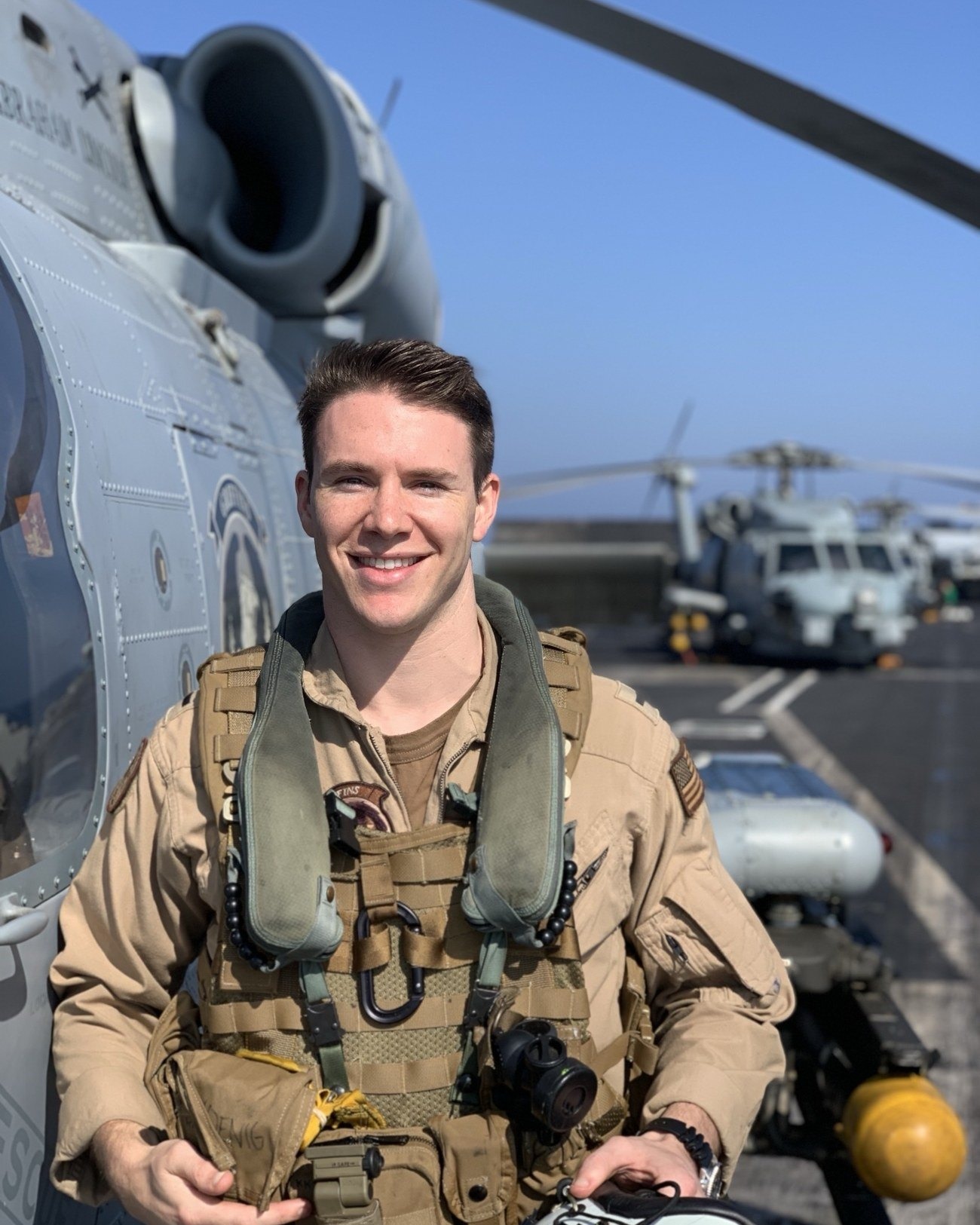
For ten years, Kyle Koenig flew Navy helicopters hunting submarines by sound, a job where you learn that a submarine has a voice. Then he read about a 5,000-year-old chamber in Malta that pours a man’s voice back out of the stone from everywhere at once, and he couldn’t stop asking questions. Why did Ice Age painters put their art where caves ring loudest? Why does a Maya pyramid answer a handclap with a birdcall? Why did people on at least five continents turn the same seashell into a sacred horn?
This talk follows the sound from ancient caves to cathedrals to the inside of your own skull, sorts the real science from the internet nonsense, and ends with a few things you can try on yourself. Fair warning: there may be humming.
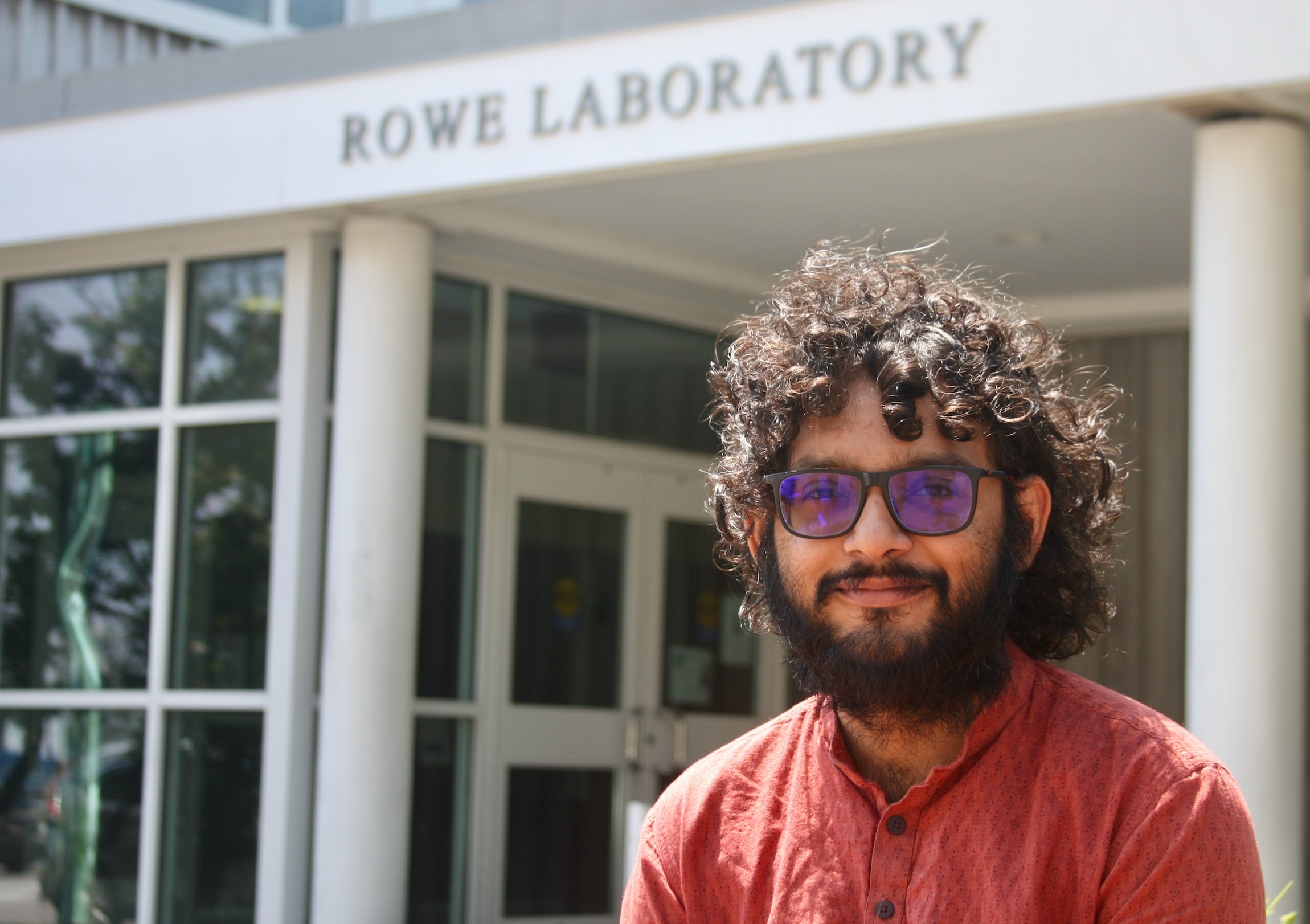
Kyle Koenig spent ten years in naval aviation, eight of them flying the MH-60R Seahawk and hunting submarines by sound. His squadron gave him the callsign Kunu, after Paul Rudd’s surf instructor in Forgetting Sarah Marshall, and he has made peace with it. A Naval Academy grad and lifelong collector of arrowheads and sea glass, he’s now writing The Resonant Body, a book about why cultures that never met kept building places that do strange things to sound. He lives in San Diego.
J. Carroll
“The More the Merrier: A Guide to Welcoming Your Non-Monogamous Guest(s)”
They say they’re ethically non-monogamous (ENM), and you have questions. For example, must you invite all of their partners to your home? Learn definitions, a bit of history, etiquette (including what never to ask), and answer a common burning question using a handy flow chart.
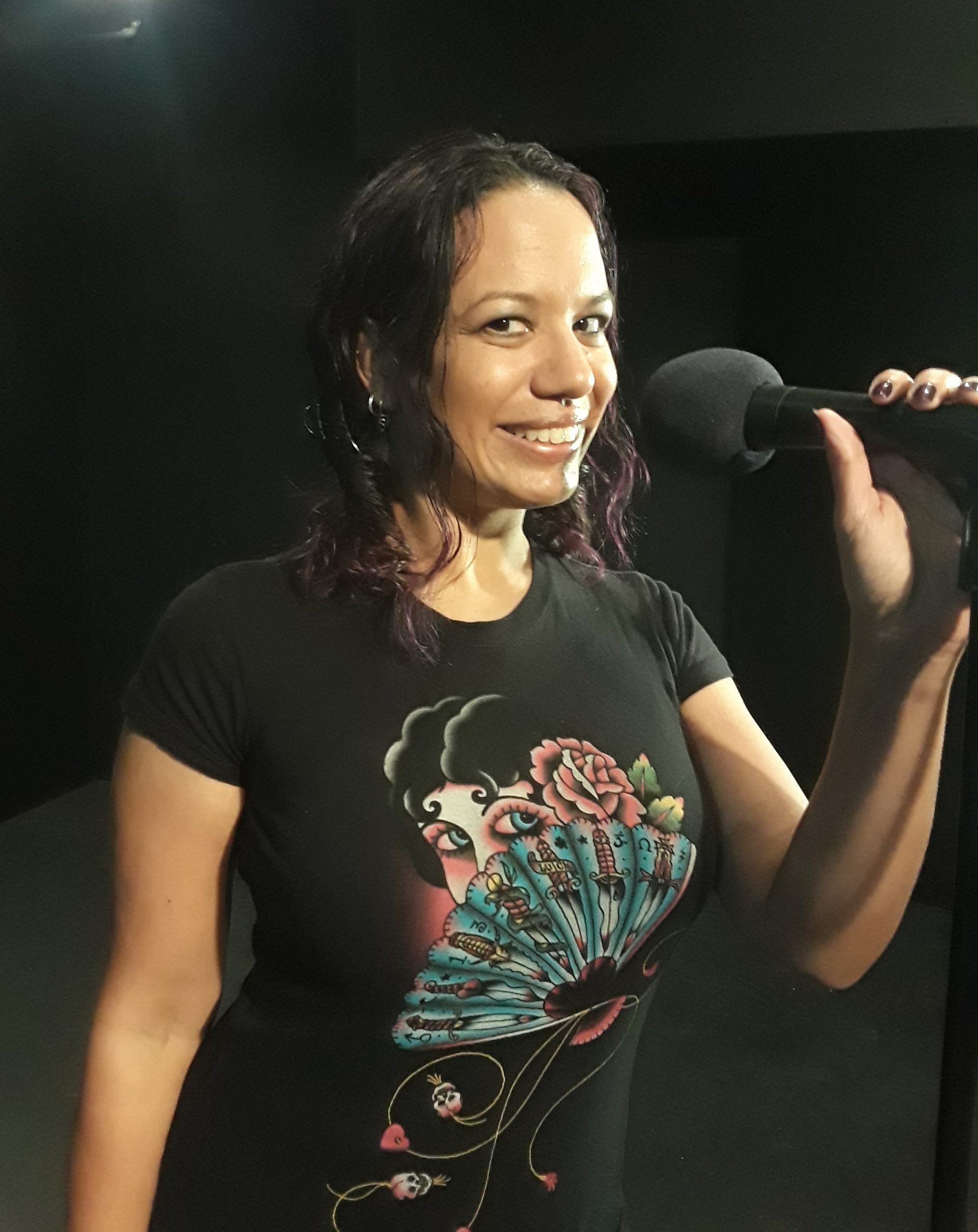
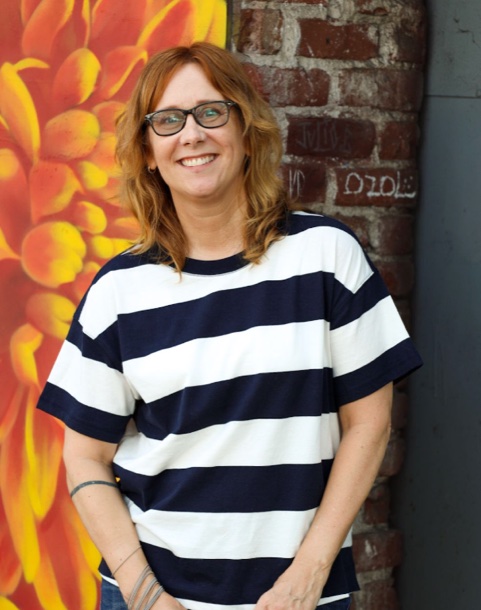
J. Carroll “StarLitWriter” (she/her) is an onstage storyteller and author published in 57 books. Her topics range from cybercrime and math tricks to Burning Man and the ways texting is changing (ruining?) the English language. Previously, she was a ghostwriter for Oprah resident doctor Michael Roizen, translating clinical trial results for lay audiences. For her book Strange Science, she low-key stalked Neil deGrasse Tyson, but alas, he ignored her. Even without the famous science guy, the book earned recognition from the Foreword INDIES Book of the Year Awards.
J. regularly performs in true storytelling shows, blending personal narrative with scientific and historical facts. Her story called “The Captive Audience Magic Show” was adapted into an award-winning short film, while others have been featured on the Risk! podcast (NY), Better Said Than Done (VA), Stand Up Smut (Portland), and some awkward comedy shows in Mexico. You can see her work and provide support as a subscriber at www.patreon.com/starlitwriter.
Benjamin Rocke
“New Drone, who Dis: Using Modern Tech to Remember Century-Old Sins”
Several years ago, a documentary aired in Britain that renewed attention to something profoundly disturbing in Africa: a dark chapter of colonial history that has been missing from the history books.
During the First World War, colonial powers across Africa forcibly conscripted Black African people to fight and labor for them. When those Africans died serving their merciless overlords, were they commemorated in the same way as their white counterparts? Not really. Sometimes not at all! The reason was mostly just racism. Many of their graves were left unmarked or forgotten, despite the fact that burial and commemoration standards existed at the time for white people. And that’s where forensic geology and drones come in.
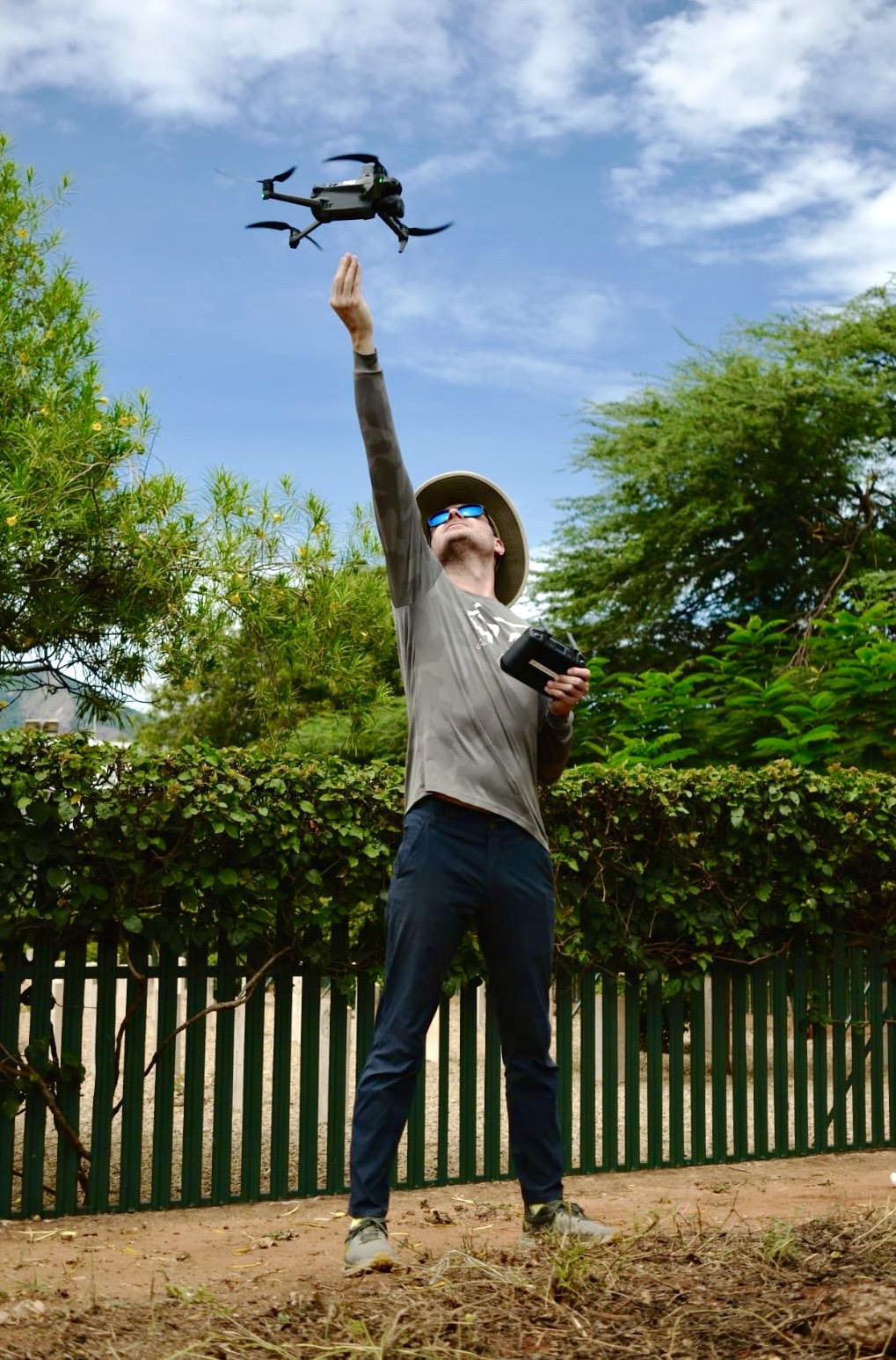
Using drones and forensic geology, I help uncover this hidden history and locate graves that were never properly commemorated, restoring dignity to the lives lost in this depraved timeline. If you’re wondering about the connection between colonialism, drones, and geology, you’ll have to come to my talk.
I worked as a sedimentologist for years, and seeking more interesting work than studying limestone, decided to get my doctorate in forensic geology to help people search for unmarked graves with a drone. I’ve helped piece together stories about mass graves, worked cold case homicides, and done field work in over a dozen countries attempting to locate human burials in a variety of contexts. If Indiana Jones and the kid from The Sixth Sense had a baby, it would be my dissertation.
“That One Time Life Almost Disappeared: The Permian Mass Extinction”
Gabriel-Philip Santos is a paleontologist, educator, and storyteller. He is cohost of PBS Eons and the Director of Visitor Engagement and Education at the Alf Museum of Paleontology. He has degrees from UC Irvine and CSU Fullerton. His previous research interests focused on evolution of marine mammals, particularly in the extinct hippo-like desmostylians. He now focuses his work on science education and engaging audiences through projects like the Cosplay for Science Alliance developing educational content for comic cons and other pop culture events. He was named a 2021 Grosvenor Teacher Fellow with National Geographic and Lindblad Expeditions for his work in science education and continues to develop his skills as a science storyteller through projects around the world.
Aalok Varma, PhD
“An unexpectedly useful transformation – the Burrows-Wheeler Transform”
Data often needs to be processed in some way to make it more efficient to store and access, or to extract relevant information from it. One particular method of processing data that’s in the form of text is called the Burrows-Wheeler Transform (BWT).
This transform shuffles text by rotating the order of the letters, sorting the rotations alphabetically, and then taking the last character of each sorted rotation. At first glance, the transformation seems ridiculous and unlikely to be useful. However, the shuffle is clever, as it produces a unique result for each input and has the property of clustering repeated characters together. What’s more, the BWT is reversible, so you can get back the original text from its transform. In my talk, I’ll walk through the BWT and share how it is used in different scientific fields – from computer science (data compression) to genomics (sequence alignment).
Aalok is a biologist and avid science communicator. Formally trained in neuroscience, he obtained a PhD from the National Centre for Biological Sciences (NCBS) in Bangalore, India. He is currently a postdoctoral fellow in Dr. Loren Looger’s lab at UC San Diego, where he works on understanding how ancient viruses shaped evolution, using cephalopods (squids, octopuses, and cuttlefish) as models. Sometimes he’s interesting (reading books, blogging and writing fiction, tidepooling, playing tennis, swimming, giving science talks), and sometimes he’s into resting (watching TV in bed). His blood is almost always caffeinated, yet sleep is his superpower. Learn more about Aalok at varmaalok22.github.io.
Laura Tubelle de González
“Why Mars Needs Anthropologists”
Human space exploration and anthropology may not seem to have anything in common. However, when the focus on space travel and settlement is stuck on the question “how can we science it?” it’s important to also ask “how the heck is it all going to work once we get there?” Our carbon flesh units are much less equipped for space settlement than the STEM folks give us credit for. This talk will address some human aspects of space exploration that we don’t talk about, but probably should.
Laura Tubelle de González (she/her) couldn’t believe it when she learned in college that you could be nosy for a living as a cultural anthropologist. She combines her love for ethnographic research and teaching as a professor of anthropology at San Diego Miramar College. She is the author/co-author of two anthropology textbooks and a 2021 ACLS/Mellon Fellow for research on the anthropology of human space exploration. If Laura could live in a sci-fi universe, it would be as a crew member on the original 1966 Star Trek, mostly just to walk through the doors as they go whoosh. She would prefer not to be wearing a red shirt, however.