Tickets are available for our next Nerd Nite on Thursday, February 26! Get them here
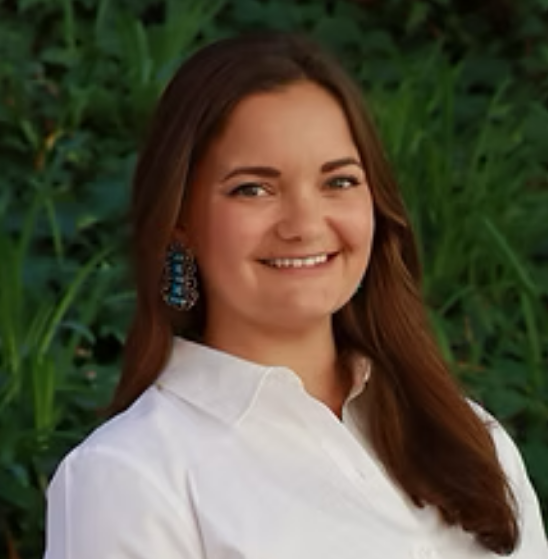
Catherine Schrankel
“The Real Superpowers of Weird Invertebrates in the Ocean”
Ever wondered why the Octopus is SO good at disguising itself? Do you think there are other animals that have unique superpowers compared to us humble humans? And who the heck studies this, and why should we in the first place?? Come join me under the sea to explore the answer to these questions and more!
Catherine (or “Dr.Cat” to her students), opened her cell biology lab at San Diego State University in Fall 2022. Her research is focused on the tools used by different cell types in animals (specifically Urchins–both the human and marine animal kind!). Anchored by her background in toxicology in mammalian cells (PostDoc at UC San Diego), Evolution of Immune Systems (PhD at University of Toronto), and developmental biology (honestly, since 5th grade?), DrCat’s lab seeks to understand how cells and tissue protect themselves from non-self in their environment. We are also committed to training students and improving the workforce development of the next generations in STEM research and education. Outside of the lab, DrCat enjoys cooking, exploring East County with her partner and their ridiculous fluffy dog, and doing arts and crafts in her spare time
Gillian Belk
“Life Under the Cheese”
Let’s take a walk through a cheese rind. Filamentous fungi stretch up high over our heads. Floating around us are tiny, comma-shaped bacteria and large, round yeast bumping into one another. As we float up closer to the surface, the ecosystem around us shifts. The species of yeast and bacteria begin to change, until we burst through the tangle of fungi filaments to the surface. Standing on top of the cheese rind, we marvel at many microbes working together to make the cheese smell taste delicious!
The world is full of microbes and the microscopic communities they create. Microbiomes exist in and on our bodies and inhabit nearly every niche on Earth. But the question is, how do these microbes actually interact with one another? At the microscopic level, do these tiny organisms work together or compete for resources? Or will they break our understanding of how living things can interact with one another? And… what does cheese have to do with this?
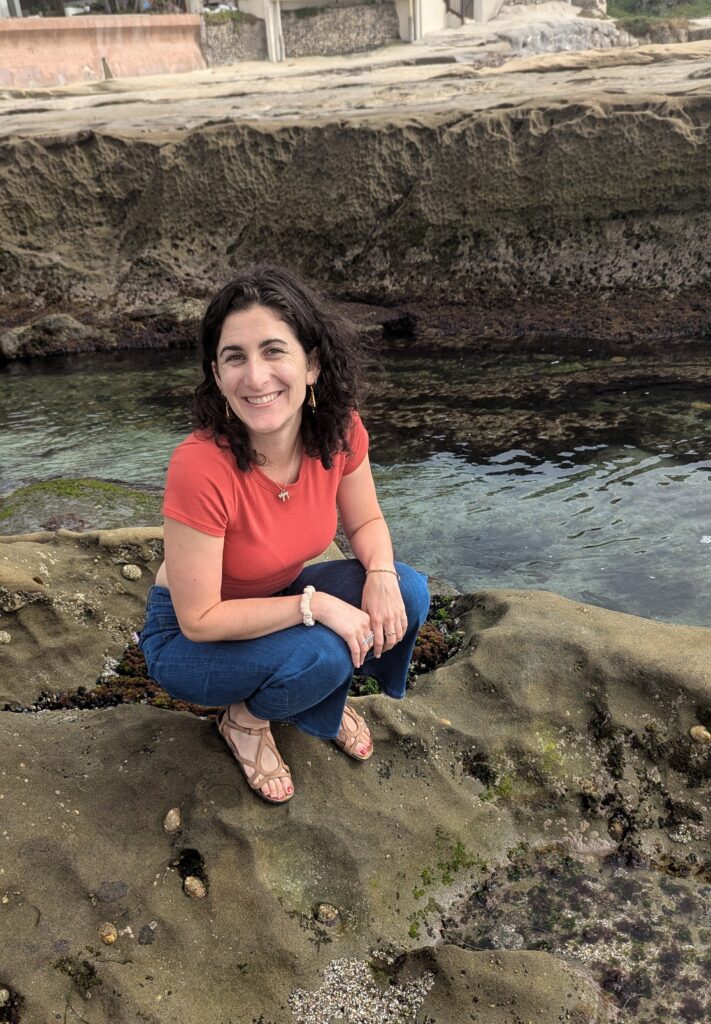
Gillian Belk is a San Diego native with a Bachelors and Masters degrees from UC San Diego. She is a scientist, educator, friend, sister, daughter, a book lover, and occasional mediocre comedian. She is fascinated by the infinite variety of microbes and their norm-breaking social interactions as well as potential to create a better world. You can find her crouching over tidepools, marveling at the world around her, and hanging out with our local sea lions. Oh, and she also loves dinosaurs.
Ian Coley
“An introduction to algebraic K-theory via cardboard paper and safety scissors”
Tackling 21st century mathematics in a 20-minute talk is a little tough, so I’ll be taking us back a century to the origins of my doctoral thesis topic, algebraic K-theory. The goal of my talk is to convince you that we can understand* both polygons and polyhedra with less information than you’d expect*. I’ll also give a robust description of what happens when we start to add holes to things (which gets considerably more complicated).
* For certain levels of understanding and expectation
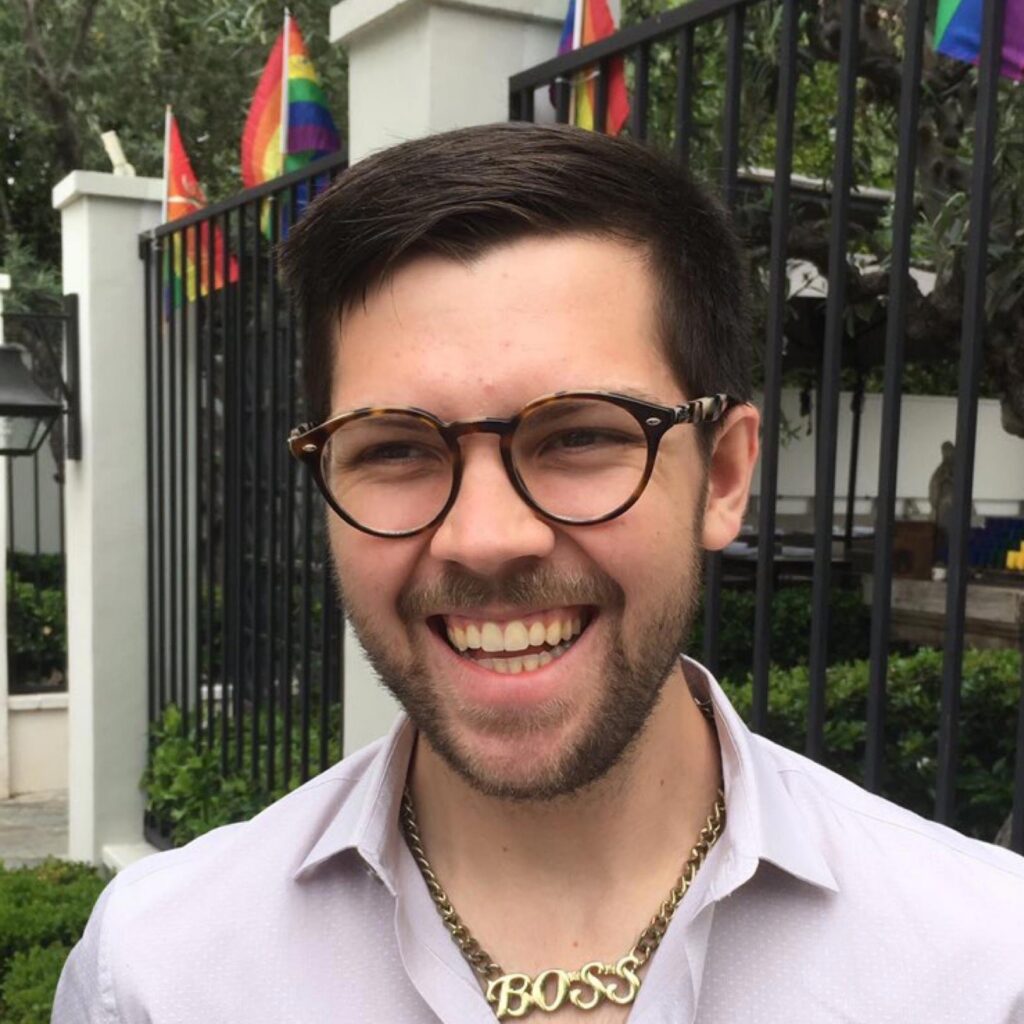
Ian Coley received his PhD in Mathematics from UCLA in 2019, focusing on algebraic K-theory and higher homotopy theory. From there, he moved to Rutgers University in New Jersey and served as a Hill Assistant Professor (postdoc) from 2019-22. Following that role, with a little motivation from a global pandemic, he transitioned from academia to management consulting, joining the Boston Consulting Group’s new San Diego office in January 2023. Since joining BCG, Ian has tried to avoid being pigeonholed as a quant before coming back to that stereotype of his own accord, working primarily in the Health Care and Tech/Fintech. Having achieved employement at BCG more less by accident rather than through careful planning, he now makes a strong effort to help PhDs (and other non-MBAs) figure out how to properly network and break into management consulting as a side project.