Tickets for our next event are available!
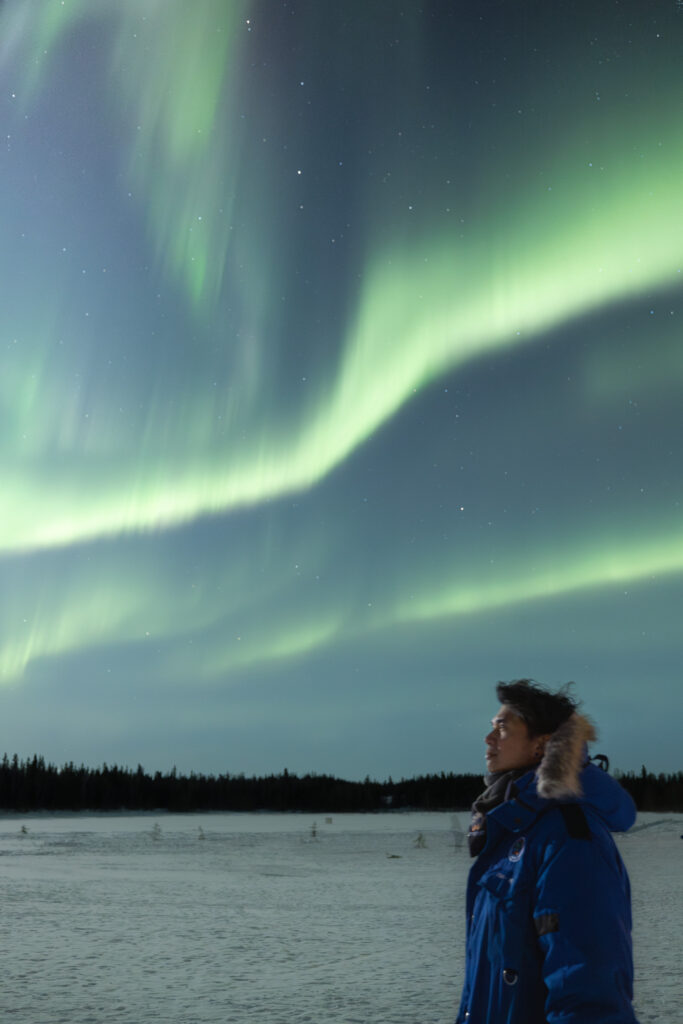
Jae Calanog
“In a Galaxy Far, Far Away… ok, but HOW FAR?”
How do we know how far objects in space are from Earth? Find out how astronomers measure distances in our Universe. Hint: You’ll need a ladder.
Jae Calanog is a Physicsand Astronomy Professorat San Diego Miramar College, and the chair of Physical Sciences. Jae earned his B.A. from UC Berkeley and his PhD from UC Irvine, where he specialized in using gravity as a telescope toexplore distant galaxies. As one of the first Filipino-American astrophysicists, he is driven to help underrepresented students succeed in STEM by creating connections and experiential learning opportunities. In his spare time, you can find him breaking(breakdancing), behind a camera, or exploring the world through travel.
Robert Quimby
“SuperAwesome SuperLuminous SuperNovae”
At the end of their lives, most stars fade quietly into the night, but a few go out with a bang. When stars explode as supernovae they can shine almost as bright as their whole galaxy of stars for a few weeks or, in the case of superluminous supernovae, even brighter for longer. What makes these supernovae so much more powerful than the rest? Ok, we’re still working on that–but we have some great leads! Some superluminous supernovae could be explosions within explosions. Others may get a power boost from super-dense, super-magnetized neutron stars at their cores. These giant explosions help shape galaxies and help seed the cosmos with the elements necessary to make people and beer, so let’s drink in this tale.

Robert Quimby is a Professor of Astronomy at San Diego State University and Director of the Mount Laguna Observatory. As an undergraduate at UC Berkeley, he contributed to the discovery of the accelerating expansion of the Universe. As a graduate student in Texas, he played a key role in identifying the first superluminous supernovae. He went on to postdoctoral positions at Caltech and the Kavli IPMU in Japan, where he discovered the first Type Ia supernova magnified by a gravitational lens. Back in high school, he joined the marching band so he wouldn’t have to take P.E.–a decision that somehow led to a brief stint playing trombone in a ska band. More recently, he ran a marathon, so he never has to do that again.
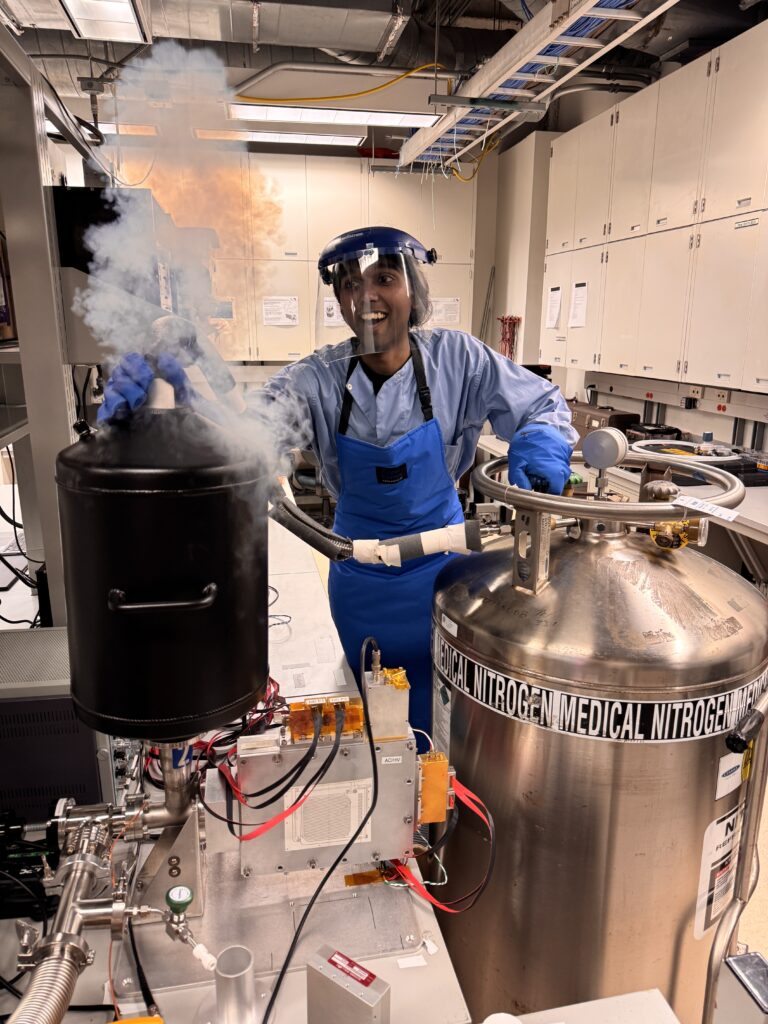
Aravind Valluvan
“The Cosmic Origins of the Periodic Table”
Tonight on Cosmic Secrets Live… How did Earth get all its gold? Can you whip up gold by mixing water and lead, or is there a hidden treasure factory bubbling deep underground? Spoiler alert: Earth hasn’t created any gold since it formed 4.5 billion years ago – then where did they really come from? In a quickfire 25 minutes, I’ll take you on a tour of the Universe’s ultimate fireworks show – where gold, oxygen, and every other element on the periodic table were created in the most energetic explosions ever. Think cosmic alchemy, supernova drama, and neutron star smash-ups. It’s the story of how the stuff in your jewelry, the oxygen in the air, and the calcium in your bones were born from stars going boom.
My journey into physics started when the only thing I could do at the cinema was whine about reversed time and quantum flying buses. I am now a Ph.D. student in astrophysics at UC San Diego working on a gamma-ray space telescope called COSI – which might, just maybe, find the gold I am looking for. I got my bachelor’s degree in physics from the Indian Institute of Technology Bombay and I have since traded-in the tropical rains for eternal sunshine. When I am not in my lab, I’m probably testing gravity on my mountain bike or working on my next kitchen disaster.